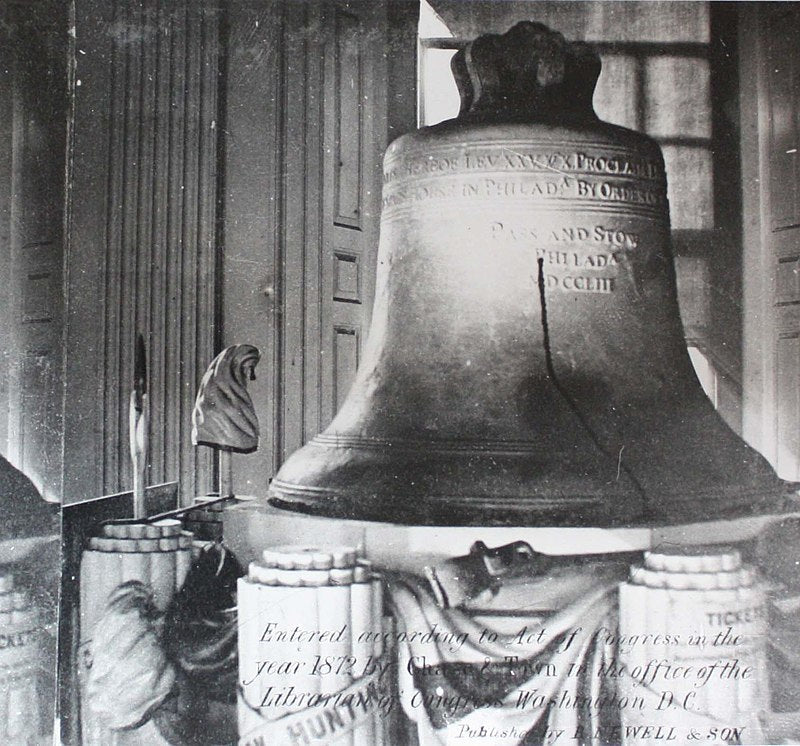
Nelson Mandela was awarded the Liberty Medal in Philadelphia, July 4, 1993. He spoke: "The Liberty Bell is a very significant symbol for the entire democratic world." (The Philadelphia Inquirer, July 4, 1993)
Noted religious critic and anti-theist Christopher Hitchens admitted in his work Jefferson Versus the Muslim Pirates (2007): "Of course, those secularists like myself who like to cite this Treaty must concede that its conciliatory language was part of America's attempt to come to terms with Barbary demands"
Miguel de Cervantes, author of Don Quixote de La Mancha (1605): "They put a chain on me ... I passed my life in that bano with several other(s) … marked out as held to ransom … We suffered from hunger and scanty clothing … Nothing distressed us so much as … seeing … unheard of cruelties my master inflicted upon the Christians ... Every day he hanged a man … all with so little provocation … Turks acknowledged he did it merely for the sake of doing it."
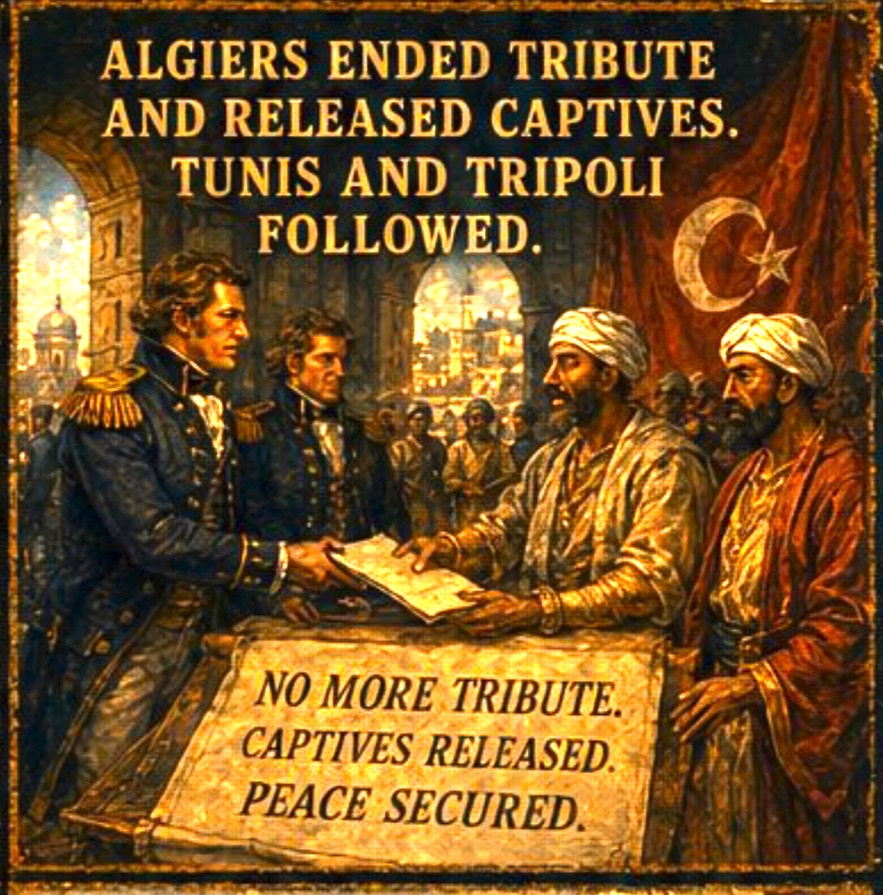
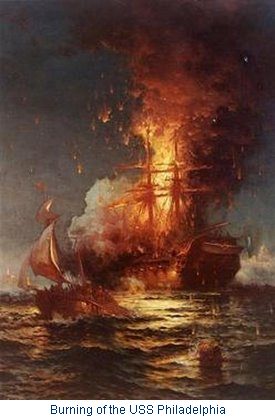
Immediately after Jefferson became President in 1801, Barbary pirates demanded $225,000, plus an annual tribute of $25,000. When Jefferson refused, the Pasha (Lord) of Tripoli declared war -- the first war the U.S. was in after becoming a nation. Jefferson sent U.S. frigates to the Mediterranean to protect American shipping.
Franklin D. Roosevelt, February 12, 1943: "In every battalion, and in every ship's crew, you will find every kind of American citizen representing every occupation, every section, every origin, every religion, and every political viewpoint. Ask them what they are fighting for, and every one of them will say, 'I am fighting for MY COUNTRY.'"