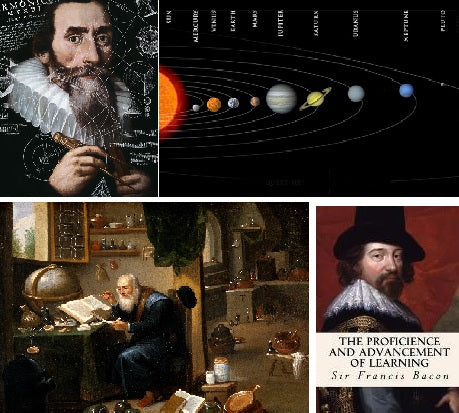
In book five of The Harmonies of the World (1619), Johannes Kepler wrote: "I had the intention of becoming a theologian ... but now I see how God is, by my endeavors, also glorified in astronomy, for 'the heavens declare the glory of God.'"
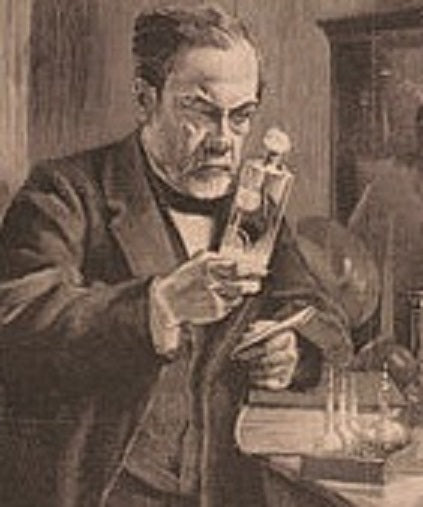
Being one of the first European scientists to reject the evolutionary theory of spontaneous generation, Louis Pasteur insisted that life only arises from life, stating:
"Microscopic beings must come into the world from parents similar to themselves ... There is something in the depths of our souls which tells us that the world may be more than a mere combination of events."
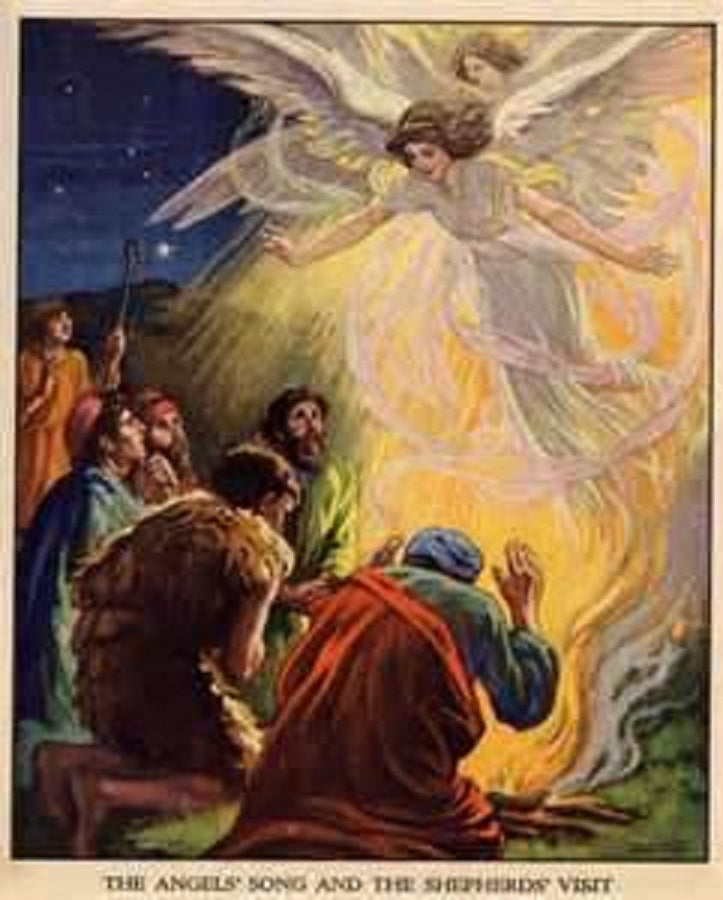
In 1739, Charles Wesley penned "Hark! how all the Welkin (Heaven) rings." George Whitefield suggested the first line be changed to "Hark! The Herald Angels Sing." The song was put to the music of Lutheran composer Felix Mendelssohn, grandson of the notable Jewish philosopher, Moses Mendelssohn. "Hark! the Herald Angels Sing" was first published in 1739 in the collection Hymns and Sacred Poems. It was republished in George Whitefield's Collection of Hymns for Social Worship in 1754.
Harvard President Samuel Langdon then gave an address, June 5, 1788, titled: "The Republic of the Israelites an Example to the American States," stating: "Instead of the twelve tribes of ISRAEL, we may substitute the thirteen states of the American union, and see this application plainly ... The ISRAELITES may be considered as a pattern to the world in all ages ... Government ... on republican principles."